
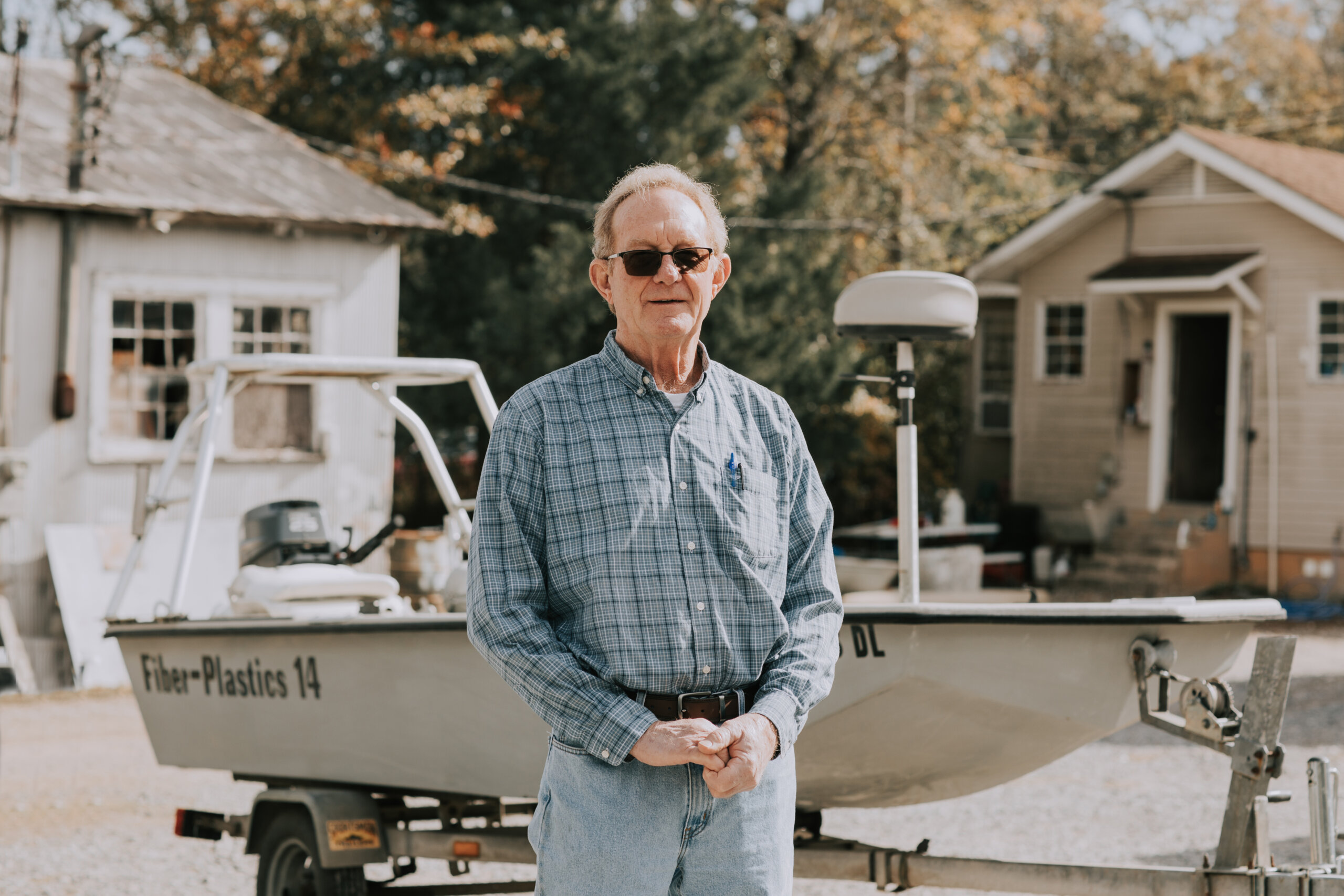
Back in the 1970s, the Lasarge brothers—Mike and John, both in their early 20s—spent much of their time in the Mobile-Tensaw River Delta. They duck hunted and fished, but struggled to get their flat-bottomed, wooden boat through muddy and icy waters. So they decided to design and build their own fiberglass version.
To do so, they borrowed from the Negus family of boat builders, building a mold off a Negus wooden hull. The Lasarges made the bottom “V” shaped, so if it got stuck in the mud, they could push it free. They gave it high sides so it could handle rough water. To cut back on weight, they eliminated the stringers and used synthetic core, or a rigid PVC foam, in the transom; they believe they were the first boat builders in the whole country to do so.
“It didn’t have a great finish, but it didn’t matter because you were going to take it out in the marsh and get it all muddy anyway,” Mike said. “You would have never seen a boat like mine at a boat show, but it did the job.”
Over the years, the brothers and their friends built more than 300 of those boats, called the 13. Later, in the 1980s, they built a tunnel boat called the 14, which was faster and allowed the motor to be raised higher, a plus for navigating in very shallow water. In the 1990s they made a 15, which was a bit more capable and could handle a 40-50 horsepower motor.
The Lasarges stopped building boats in the early 2000s. Handmade boats became too expensive for consumers. But they continue to do fiberglass repairs today, including on Lasarge boats. Mike has kept track of nearly every boat he ever built.
“I run into people all the time who still use ’em,” Mike said. “Generally, every one that’s ever been made is still operatable. They don’t deteriorate, they’re inexpensive to repair, they’re easy to fix and pretty timeless. They may not be overly pretty when they get old, but they’re still very usable.”
WHY IS THIS AREA HOME TO SO MANY SUCCESSFUL BOAT BUILDERS?
Mike Lasarge said the reason boat craftsmen have thrived in “America’s Amazon” is because of its unique geography.
“Go 10 miles in any direction and you’re at the water,” Mike said. “We have a real opportunity here that it’s so unlike so much of the rest of the country. I spent years up in that Delta but I haven’t been everywhere. There’s no way in a lifetime you could see it all.”