Tensaw Boatworks

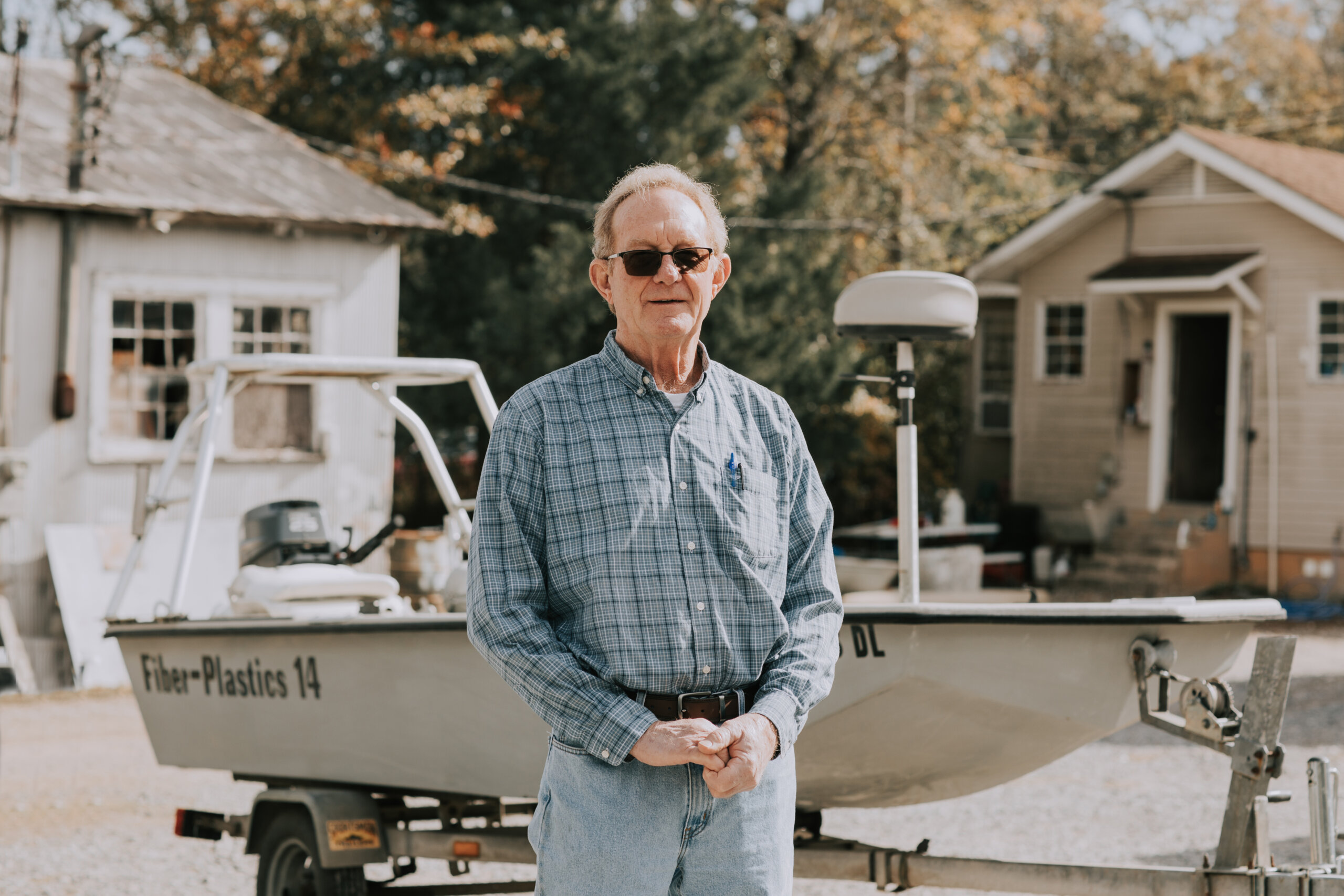
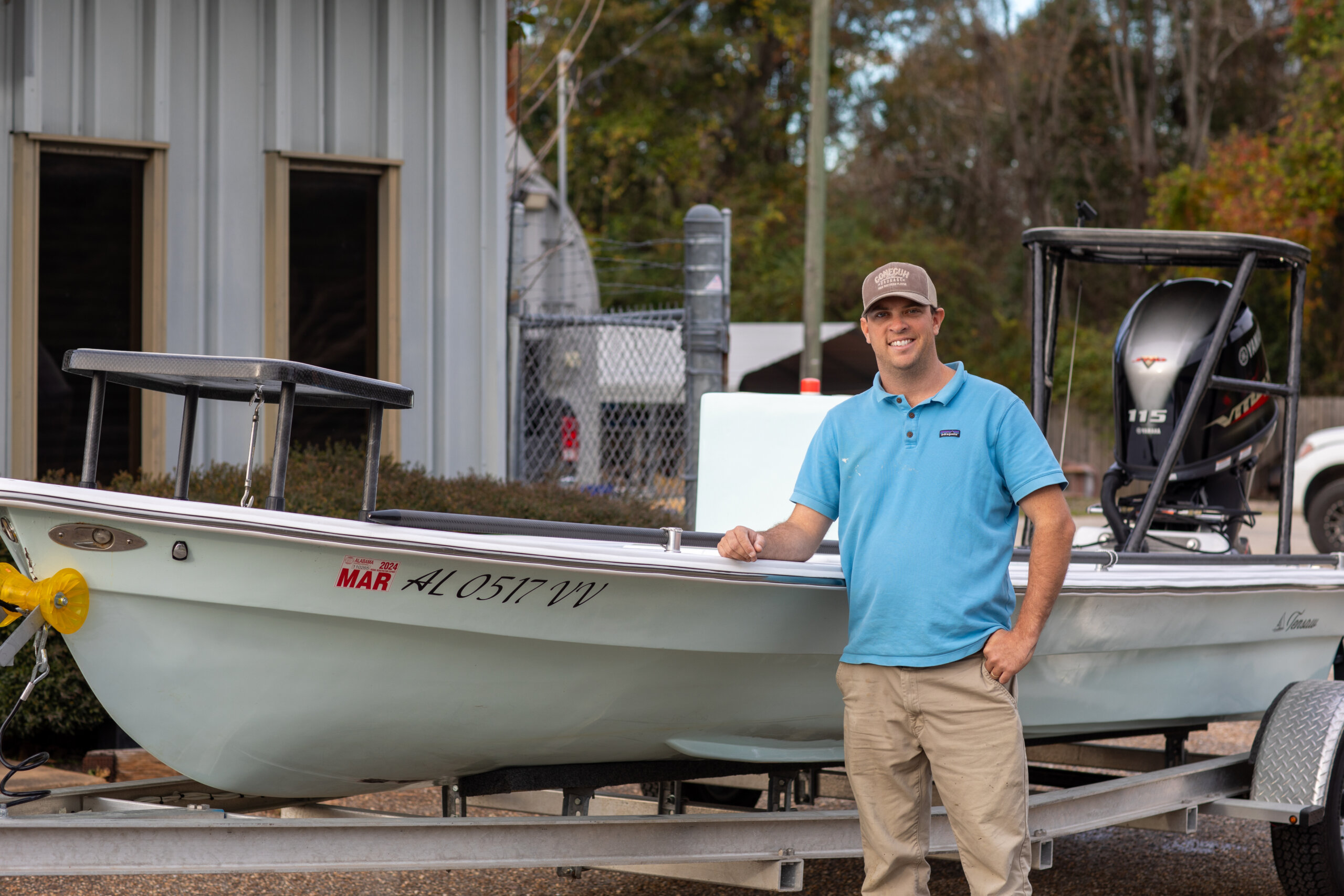
Ben Cummings Jr. is new at this. In his mid-20s, he’s only been in the boat-building business for a few years, and he didn’t finish his company’s first hull, a prototype of his Tensaw model, until the fall of 2023.

“I grew up on the bay and down at the [Dauphin] Island,” Cummings said. “Everybody in the area loves being on the water. But to be honest, I feel like there’s not a lot of boat builders currently. At least not yet.”

Cummings has worked on boats, doing repairs and electrical work, since he was in high school at McGill-Toolen Catholic High School and in college at the University of Mississippi. After college, he launched his own fly-fishing charter business, Delta Fly Fishing, and did small marine jobs in his parents’ garage in Ashland Place.

He outgrew that space and opened his own shop, Tensaw Boatworks, in 2021 near Dog River. From there, he recruited a naval architect to draw up plans for Tensaw’s signature boat, a 19-foot skiff that can glide on mere inches of water, ideal for shallow-water fishing. Next, Cummings got the dimensions and built a temporary jig, added foam and then fiberglass.

He said people have shown a lot of interest in it when he runs it around Dog River. He doesn’t expect there to be a problem selling it; the challenge has been the fabrication, as construction is more of an art than a science. He suspects that’s why there aren’t many boat builders still in the area.

“There’s the old timers like Stauter, but I kind of saw an untapped market,” Cummings said. “Most of the big companies are in South Florida or on the East Coast somewhere. That could be for a multitude of reasons, one being it’s hard. But it’s rewarding work. I love doing it.”
Bosarge Boats

The Bosarge family has lived on Mobile Bay for at least 150 years. And they’ve been building boats for 75. David Bosarge, 67, who operates Bosarge Boats out of Coden, said his uncle, Floyd, started building boats in the 1950s. Floyd’s company was Bosarge Boatworks, and he exclusively built wooden boats, 14 to 60 feet long. The smaller boats were used for hunting and fishing in the Delta. These larger boats, constructed from sturdy wooden planks, were utilized in the commercial seafood industry offshore — shrimping or throwing crab pots or mullet nets.

“Years ago you would look around, there’d be people building boats in their backyards,” David said. “You don’t really see that anymore.”

Starting out in the shop as a teen, David worked for Floyd for over a decade. David left for a career at a chemical plant, where he worked for over 30 years, until he retired in 2022. During that time, David built a wooden boat for himself every few years, 16 to 20 feet long, upgrading his design with each new construction.

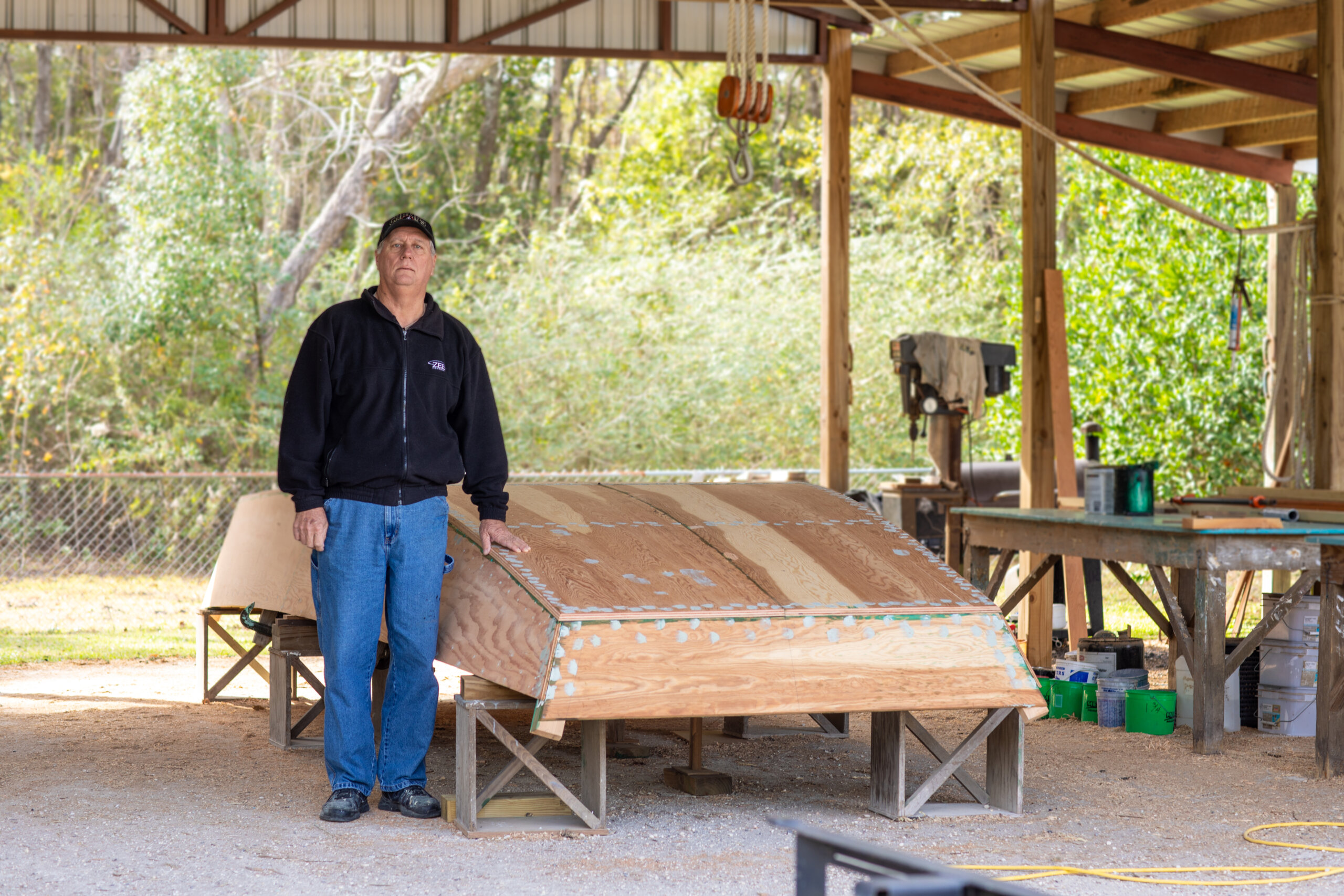
Once he retired, he was able to focus his energy on his own boat-building business. He launched Bosarge Boats at his home and built six boats, by himself, in the first year. “I’m retired, so I don’t want to get overloaded,” he said. “It’s kind of along the line of a hobby now.”

Based on what the customer wants, each boat design is different — height, length, width, depth, flat bottom (for skimming shallow water), V-bottom (for cutting through choppy waters) — but all of David’s designs are based on a blueprint passed down from his uncle. “I don’t actually have ’em written down or anything,” David said. They are all in his head.

Today, David builds his boats out of plywood, which is lighter and less expensive than wooden planks. People don’t build boats with wooden planks anymore, David said; the price of the wood is too high and the demand is nonexistent.

“It seems like its time has passed,” David said. “Let’s put it like that.”

Stauter Built Boats

Stauter Built Boats

The name Stauter is synonymous with quality wooden boats and the Mobile-Tensaw River Delta. Lawrence Stauter grew up on Conway Creek, an isolated, swampy section of the Delta, where boats were a necessity. His father, Lence, a descendant of German immigrants, taught Stauter how to build boats in 1930 even though he had no formal training.

“It was very much a side hustle for Lawrence,” said Lois Stauter, a relative involved in the Stauter business today. “Then his dad had a stroke and he needed to take care of his mom and dad. It was after World War II and he knew people were coming back from the war and they were going to have more leisurely time. That’s when he decided to start his business. He didn’t count on how successful it was going to be because it just exploded.”

Stauter launched his Stauter Boatworks business behind his home on the Causeway in 1947. He made exclusively wooden boats, using native cypress, that could traverse the delta. His boats were extremely popular with fishermen, hunters and crabbers, and he would sell dozens at a time to fish camps on the Causeway.

“Just like you go to beach towns now and there are jet skis and pontoon boats for rent, that’s the way Stauter boats were,” Lois Stauter said. “Camps would rent them out. You would see Stauter boats all up and down the river. People used Stauters for their lives, their livelihoods.”

Stauter produced several models, including 12-, 14-, 15.5- and 17.5-foot boats, all of which were practical, rugged and stable enough even for inexperienced boaters. At the height of his business, Stauter built 400 boats a year with a crew of eight employees. When the price of cypress got too high, he switched to using mahogany for the ribs and marine plywood for the sides, bottom and decking, but still needed to raise prices. Business declined because the boats became more of a luxury item.
Stauter, 68, sold his business and boat patterns to close family friends, the Lamis, after Hurricane Frederic flattened the Causeway in 1979. The Lamis moved the Stauter workshop to Three Notch Road and continued building boats until 2010, then switched to doing repair and restoration only. In 2024, they will relaunch the boat-building aspect of the business.

“We’ve got a family tradition of uncompromising quality,” Lois Stauter said. “These are damn good boats. If you cover those suckers, you could have ’em for a lifetime.”

Lasarge Boats

Back in the 1970s, the Lasarge brothers—Mike and John, both in their early 20s—spent much of their time in the Mobile-Tensaw River Delta. They duck hunted and fished, but struggled to get their flat-bottomed, wooden boat through muddy and icy waters. So they decided to design and build their own fiberglass version.

To do so, they borrowed from the Negus family of boat builders, building a mold off a Negus wooden hull. The Lasarges made the bottom “V” shaped, so if it got stuck in the mud, they could push it free. They gave it high sides so it could handle rough water. To cut back on weight, they eliminated the stringers and used synthetic core, or a rigid PVC foam, in the transom; they believe they were the first boat builders in the whole country to do so.

“It didn’t have a great finish, but it didn’t matter because you were going to take it out in the marsh and get it all muddy anyway,” Mike said. “You would have never seen a boat like mine at a boat show, but it did the job.”

Over the years, the brothers and their friends built more than 300 of those boats, called the 13. Later, in the 1980s, they built a tunnel boat called the 14, which was faster and allowed the motor to be raised higher, a plus for navigating in very shallow water. In the 1990s they made a 15, which was a bit more capable and could handle a 40-50 horsepower motor.

The Lasarges stopped building boats in the early 2000s. Handmade boats became too expensive for consumers. But they continue to do fiberglass repairs today, including on Lasarge boats. Mike has kept track of nearly every boat he ever built.

“I run into people all the time who still use ’em,” Mike said. “Generally, every one that’s ever been made is still operatable. They don’t deteriorate, they’re inexpensive to repair, they’re easy to fix and pretty timeless. They may not be overly pretty when they get old, but they’re still very usable.”

WHY IS THIS AREA HOME TO SO MANY SUCCESSFUL BOAT BUILDERS?

Mike Lasarge said the reason boat craftsmen have thrived in “America’s Amazon” is because of its unique geography.

“Go 10 miles in any direction and you’re at the water,” Mike said. “We have a real opportunity here that it’s so unlike so much of the rest of the country. I spent years up in that Delta but I haven’t been everywhere. There’s no way in a lifetime you could see it all.”